
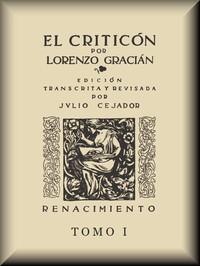
El criticón (tomo 1 de 2) by Baltasar Gracián y Morales
Okay, let's be real: a 17th-century Spanish philosophical allegory doesn't sound like a page-turner. But trust me, El criticón will surprise you. It's less like reading a dusty old tome and more like listening to a brilliantly sarcastic, slightly cynical uncle explain the world.
The Story
The plot is a journey, both literal and metaphorical. We meet Critilo, a sensible but worldly man stranded on an island. There, he discovers Andrenio, a man raised by animals with zero knowledge of civilization. Critilo becomes Andrenio's guide, and they travel through a landscape that's one big symbol. They don't just visit towns; they navigate the 'Court of Deceit,' run into 'Dame Self-Love,' and get tangled up with 'Sir Presumption.' Every encounter is a lesson—usually a warning—about the silly, vain, and often dishonest ways people behave. The first volume sets them on this path, with Critilo trying to teach Andrenio how to see through the lies of the world while not becoming completely jaded himself.
Why You Should Read It
What hooked me was how modern it feels. Gracián is basically roasting 1600s society, but you could swap the costumes and his targets are the same today: social media fakery, blind ambition, people who talk but don't think. It's darkly funny. You'll nod along, thinking, 'Yep, I know someone exactly like that character.' The relationship between the naive Andrenio and the weary Critilo is the heart of the book. Their conversations are where the magic happens—it's like watching pure instinct bump up against hard-earned, skeptical experience.
Final Verdict
This book is perfect for anyone who loves sharp observations about human nature, enjoys stories like Gulliver's Travels or The Pilgrim's Progress, or is just in the mood for something completely different from modern fiction. It's not a breezy read—you have to be okay with pausing to think—but it's incredibly rewarding. If you've ever felt frustrated by hypocrisy or wondered how to be smarter about the world, Gracián feels like an ally from four centuries ago, giving you a knowing wink.
Legal analysis indicates this work is in the public domain. Access is open to everyone around the world.
Amanda Walker
1 year agoTo be perfectly clear, it challenges the reader's perspective in an intellectual way. Highly recommended.



Barbara King
1 year agoThis is one of those stories where the atmosphere created is totally immersive. A true masterpiece.