eBooks
97 Books foundWelcome to the EPEFE Public Domain Literature Library
This catalogue provides access to 97 public-domain works, focusing on medieval and early modern European history, literature, and culture. Each book has been selected for its historical significance and readability in digital form.
Browsing the Catalogue
You can explore the collection by browsing the full list at /ebooks, or by using the category guides linked from the navigation. The catalogue is organized into four thematic categories, each with its own guide that explains context, recommends specific works, and discusses the scope and limitations of the grouping.
Book Records and Information
Each book record includes the title, author(s), digital source (Project Gutenberg), keywords, a target-reader note, and a catalogue note that provides insight into the work's content and style. The note is written to help readers decide whether a book suits their interests. Titles and slugs are also provided for easy reference.
Source Attribution
All books in this library are sourced from Project Gutenberg, a trusted repository of public-domain ebooks. The catalogue does not host files directly but links to the Project Gutenberg editions. Attribution for translations, editors, and illustrators is included where present in the source records.
Categories Overview
The four categories — Middle Ages, Medieval Society, and Kings Kingdoms — are designed as navigational aids rather than definitive literary judgments. They reflect broad thematic clusters that emerged from the works themselves. For detailed guidance, refer to each category's dedicated guide.
Three Reading Paths
Path 1: The Medieval Church and State. Start with A History of the Inquisition of the Middle Ages; volume I by Henry Charles Lea, then Secret Societies of the Middle Ages by Thomas Keightley, and finish with William of Malmesbury's Chronicle of the Kings of England. This path explores the intersection of religious authority, secretive orders, and royal power.
Path 2: Peoples and Nations. Begin with The Anglo-Saxon Chronicle, then On the Ruin of Britain by Gildas, and conclude with The History of England from the Norman Conquest to the Death of John (1066-1216) by George Burton Adams. This sequence traces the formation of English identity from Celtic to Norman times.
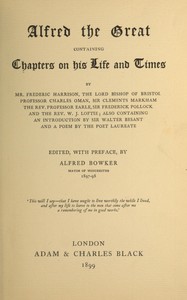
Path 3: Lives and Legacies. Read Richard II by Jacob Abbott, then King René d'Anjou and His Seven Queens by Edgcumbe Staley, and finally Alfred the Great by various authors. This path Catalogue maintenance uses source records and bibliographic context.
Practical Notes
The catalogue is updated periodically as new public-domain works are identified. For questions or suggestions, contact the catalogue project at editor@epefe.com. For more about the catalogue's editorial practices, see the Editorial Standards page.
Bibliographic dates and catalogue measurements
The catalogue distinguishes the Project Gutenberg digital release from a work’s original or first publication. Project Gutenberg is identified as the digital source for the edition available here; its release year is therefore shown as Gutenberg Release Year, not as the work’s original publication year.
When an explicit first-publication or issue date can be supported directly by the title or issue information, it may be shown separately as First Publication Year. When that date cannot be confirmed, the catalogue displays Not confirmed rather than guessing a year.
Where the source text can be measured reliably, the catalogue may provide word count and estimated reading time. These measurements describe reading scope and are not quality rankings.
The current catalogue contains 4 active subject categories: Middle Ages, Crusades, Medieval Society, and Kings Kingdoms. Categories are browsing aids and may overlap where a work reasonably fits more than one subject.
- Featured

![Cover of The chronicles of Enguerrand de Monstrelet, Vol. 05 [of 13] — Story, Setting & Ideas](https://epefe.com/storage/media/covers/pg73983.jpg)