
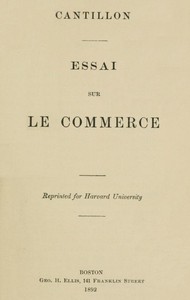
Essai sur le commerce by Richard Cantillon
Richard Cantillon's Essai sur le commerce (Essay on Commerce) isn't a novel with a plot in the traditional sense. Instead, its "story" is the logical unraveling of how an economy functions. Written around 1730, it's one of the first attempts to create a complete, systematic theory of economics.
The Story
Cantillon builds his economic world from the ground up, quite literally. He starts with a simple model: a large estate owned by a prince. The prince's spending decisions determine what gets produced. From this core idea, Cantillon expands the view to an entire nation. He traces how money flows from landowners to entrepreneurs (a word he helped popularize) and to laborers. He explains how prices are not random but are set by the intrinsic "land value" of goods and the costs of production. The book follows the chain reaction of economic activity, showing how a change in fashion, a new mine, or a war abroad can ripple through trade, alter prices, and shift populations. It's a story of cause and effect, risk and reward, written with the clarity of someone mapping uncharted territory.
Why You Should Read It
Reading Cantillon feels like getting economics without the polish. There's no political agenda or moralizing—just a brilliant, practical observer connecting dots. His focus on the entrepreneur as the central risk-taker and engine of change is thrilling. You can see the raw ideas that later economists would refine. But more than that, it’s his perspective I love. He writes as a man of business, not just theory. You sense the experience behind his words, the understanding of real markets, speculation, and currency exchange. It makes abstract concepts feel immediate and tangible. This isn't a dry treatise; it's the work of a sharp mind trying to make sense of the chaotic, vibrant commercial world he inhabited.
Final Verdict
This book is a must for anyone interested in the history of ideas, economics, or business. It's perfect for the curious reader who enjoys primary sources and wants to see where modern economic thought began. If you've ever read Adam Smith and wondered what came before, here's your answer. Be prepared: the language is formal 18th-century prose, and it requires a bit of focus. But the payoff is immense. You're not just reading a book; you're getting a masterclass from one of the first and most original economic thinkers, a man whose own life was as risky and dramatic as the markets he described.
This content is free to share and distribute. It is now common property for all to enjoy.
Joseph Taylor
2 months agoAfter hearing about this author multiple times, the clarity of the writing makes this accessible. Truly inspiring.
Sarah Torres
2 months agoLoved it.
Sandra Jones
1 year agoGreat read!
Edward Torres
6 months agoI started reading out of curiosity and the storytelling feels authentic and emotionally grounded. A true masterpiece.
Andrew Martin
1 year agoTo be perfectly clear, the emotional weight of the story is balanced perfectly. A valuable addition to my collection.