About 326 minutes
The chronicles of Enguerrand de Monstrelet, Vol. 05 [of 13] — Story, Setting & Ideas
Medieval Society
74,830 recorded words. 1 minutes difference from this book's estimate.
View Gutenberg source #73983
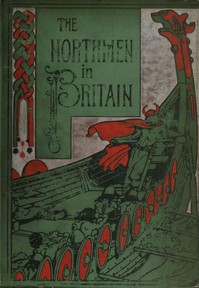
The Northmen in Britain — Text and Context can be approached with a clearer sense of reading commitment from its source measurements: 74,666 words, 5 hr 25 min estimated reading time, and 42 detected text sections.
The text analysis averages about 27.8 words per sentence, while the detected sections provide another way to judge how the source is divided.
Project Gutenberg metadata also associates the work with “Northmen -- Great Britain,” connecting these edition facts with the source record’s subject description.
Explore this collection
These alternatives are selected using recorded categories and estimated reading time.
About 326 minutes
Medieval Society
74,830 recorded words. 1 minutes difference from this book's estimate.
View Gutenberg source #73983About 328 minutes
Medieval Society
75,413 recorded words. 3 minutes difference from this book's estimate.
View Gutenberg source #37780About 318 minutes
Medieval Society
73,037 recorded words. 7 minutes difference from this book's estimate.
View Gutenberg source #64948Search stored excerpts and compare books → Choose by your preferences →
Choices use stored catalog measurements. Estimates vary with reading speed. A shared category is a catalog label, not a claim that two books have the same argument or literary quality.
Search reads excerpt text stored with this catalog and links to its associated Gutenberg record. The connection is stored in the site database; this tool does not recheck that every excerpt is word-for-word identical to that external record. Excerpt search does not cover every chapter and does not verify historical publication dates.
Catalog snapshot checked: 2026-09-26. Coverage: 97 public books, 97 available source excerpts.
Calculated from edition completeness, EPUB availability, text structure and catalogue metadata. Not a user rating.
Total of 100 points, scaled to a 2.5-5.0 range. Editions with an empty description or a missing EPUB file are not scored.
Public-domain source text
The source text is kept in the dedicated reader, separate from this catalogue record and its commentary.
Eleanor Hull opens The Northmen in Britain with an epigraph from the Old English poem 'The Seafarer,' immediately signaling that her account will attend to the internal experience of the Norse adventurer—'sad yearning towards the sea-faring'—as much as to the external record of raids and settlements. The foreword then draws a clear geographical distinction between two streams of immigration: Norsemen from western Norway settling in the Orkneys, Shetlands, and down the eastern and western coasts of Britain, and Danes moving around the southern shores via the English Channel. This dual framework structures the entire work, which relies on chronicles, sagas, and place-name evidence rather than on a single narrative arc.
Hull’s opening chapters establish a contrast that the catalog subject 'Northmen' might obscure: the Norsemen and the Danes, though often grouped together, followed distinct paths and established different kinds of settlements. The Norsemen, she writes, came 'from the deep fiords of Western Norway,' pushing into the Atlantic and settling the Orkney and Shetland Isles before moving southward to Caithness, Fife, and Northumbria on the east, and to the Hebrides, Galloway, and Man on the west. The Danes, by contrast, 'seem to have been the first to invade Northumbria' but their main movement was 'round the southern shores of England.' Hull emphasizes that both streams met in Ireland, where 'a sharp and lengthened contest was fought out between the two nations.' This geographic specificity is one of the book’s strengths, grounding the narrative in physical landscapes rather than in abstract ethnic categories.
Hull presents the viking not as a fixed type but as an evolving figure. Initially 'a bold adventurer,' the Norseman soon combined 'trading and raiding' as a settled practice. The excerpts show that Hull tracks this transformation through political changes, such as the policies of Harald Fairhair, first king of Norway (872–933), who prompted 'a nobler type of emigrant'—great lords and kings’ sons—to consolidate earlier settlements. The book thus resists a monolithic portrait of the Northman, instead showing how economic and political pressures reshaped Scandinavian activity in Britain over three centuries. Hull’s use of saga material, including the story of Gormliath ('the fairest of women, and best gifted in everything that was not in her own power'), adds a personal dimension to these broader shifts, though the excerpts leave unclear how fully she integrates such saga episodes into the larger argument.
The most detailed excerpt concerns Brian Boru’s campaigns against the Northmen in Ireland. Hull describes Brian’s 'untiring war' to drive invaders from Munster, his victory at the Glen of the Gap, and his capture of the Danish fort of Dublin. The narrative includes vivid details: Brian’s son Morrogh pulling King Melmora from a yew tree, the division of spoils ('gold and silver ornaments and precious stones, goblets and buffalo horns'), and the reversal of fortunes whereby 'the foreigners became their slaves.' Hull also recounts Brian’s peacetime achievements—purchasing books, rebuilding churches, making bridges and causeways—before turning to the conspiracy that led to his downfall, sparked by the 'angry words of a jealous woman,' Gormliath. This section reads almost like a saga itself, with Hull drawing on Irish annals and Northern sources to create a dramatic, morally complex portrait of a ruler who both subdues and absorbs his enemies.
Readers should note that Hull’s work, published in 1913, reflects the scholarly conventions of its time: it assumes a unified national story and uses terms like 'race' and 'civilization' in ways that may feel dated. The book is best approached as a synthesis of early twentieth-century historical and philological research, not as a modern critical study. Those interested in the material culture of the Norse settlements or in recent archaeological findings will need to supplement Hull’s text with contemporary sources. Her strength lies in the clarity of her geographical framework and her willingness to let the voices of the sagas and annals speak directly to the reader.
There’s something grounding about tracing the old routes—the Norse and Danish footprints across Britain—and feeling how much soil remembers. It makes me think of another island’s layered past, where the same centuries left quieter, deeper marks. I often find myself reaching back to An Illustrated History of Ireland from AD 400 to 1800 — Themes and Context when I want that slower, older rhythm again.
Create a short personal record of your experience with this book.









