About 685 minutes
A History of Domestic Manners and Sentiments in England During the Middle Ages — A Closer Reading
Middle Ages
157,372 recorded words. 21 minutes difference from this book's estimate.
View Gutenberg source #59351
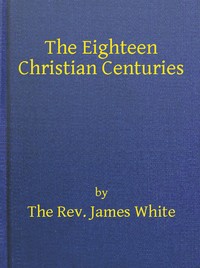
The catalog record for The Eighteen Christian Centuries — Background and Themes provides practical reading context through 162,311 words, 11 hr 46 min estimated reading time, and 15 detected text sections.
The text analysis averages about 24.5 words per sentence, while the detected sections provide another way to judge how the source is divided.
Project Gutenberg metadata also associates the work with “History, Modern,” connecting these edition facts with the source record’s subject description.
Explore this collection
These alternatives are selected using recorded categories and estimated reading time.
About 685 minutes
Middle Ages
157,372 recorded words. 21 minutes difference from this book's estimate.
View Gutenberg source #59351About 664 minutes
Middle Ages
152,581 recorded words. 42 minutes difference from this book's estimate.
View Gutenberg source #50328About 605 minutes
Middle Ages
139,097 recorded words. 101 minutes difference from this book's estimate.
View Gutenberg source #54334Search stored excerpts and compare books → Choose by your preferences →
Choices use stored catalog measurements. Estimates vary with reading speed. A shared category is a catalog label, not a claim that two books have the same argument or literary quality.
Search reads excerpt text stored with this catalog and links to its associated Gutenberg record. The connection is stored in the site database; this tool does not recheck that every excerpt is word-for-word identical to that external record. Excerpt search does not cover every chapter and does not verify historical publication dates.
Catalog snapshot checked: 2026-09-26. Coverage: 97 public books, 97 available source excerpts.
Calculated from edition completeness, EPUB availability, text structure and catalogue metadata. Not a user rating.
Total of 100 points, scaled to a 2.5-5.0 range. Editions with an empty description or a missing EPUB file are not scored.
Public-domain source text
The source text is kept in the dedicated reader, separate from this catalogue record and its commentary.
James White's The Eighteen Christian Centuries organizes history by century, each chapter headed by a list of emperors, kings, and authors. The excerpts reveal a work more interested in dramatic narrative than dry chronology. White writes with a moralizing tone, as when he describes the Norman Conquest's aftermath: the upstart adventurers 'filled the wretched cottages of the land with a distressed and starving peasantry.' His account of Thomas à Becket's murder frames the archbishop as a Saxon patriot, a 'great representative and deliverer' of the English peasantry. The catalog subjects—History, Modern and Middle Ages—only partly capture a text that ranges from the first century to the eighteenth, with a clear Protestant and British perspective.
White divides his work into eighteen chapters, each covering one century. The table of contents shows a consistent pattern: a list of rulers and authors precedes a narrative that often judges events morally. For the twelfth century, the heading promises 'Elevation of Learning' and 'Power of the Church,' but the excerpt focuses on Becket's murder as a crime against the nation. White calls Henry II's penitential pilgrimage 'but small compensation for so enormous a wickedness.' This moral lens is typical: centuries are not neutral periods but stages in a providential story. The first century is titled 'The Bad Emperors,' and the tenth is 'Darkness and Despair.' The structure thus imposes a value judgment on each era, making the work as much a sermon as a history.
In the twelfth-century excerpt, White dwells on the plight of the English peasantry after the Norman Conquest. He notes that the 'bitterness of dispossession was increased' by the 'lowness of his dispossessor's birth,' since Norman conquerors included 'barbers and smiths, and tailors and valets.' The Church, he writes, offered 'succour and consolation' to the 'friendless and helpless outcasts.' Becket, as an Englishman and archbishop, becomes a symbol of resistance: 'To honour à-Beckett was to protest against the Conquest.' White's language is emotionally charged, describing Becket's name as 'a household word at the hearths of the English peasantry.' This focus on class and national identity suggests a political subtext that goes beyond mere chronicle.
White enlivens his narrative with sharp character assessments. Richard I is reduced to 'the one sole virtue of animal courage,' while his brother John 'had no virtue at all.' The Plantagenet dynasty is portrayed as cursed: Henry II's 'children rebelled and died; the survivors were false and hostile.' The prose is rhetorical, with balanced clauses and moral conclusions: 'His mind, before he died, had lost the energy which kept the sceptre steady.' Such passages reveal White's debt to 19th-century literary history, where dramatic effect often trumps analytical rigor. The excerpts do not show sustained argument about causation; instead, they offer a series of vivid tableaux, each with a clear hero or villain.
Readers should approach The Eighteen Christian Centuries as a work of its time—a Victorian moral history that prioritizes narrative and national sentiment over scholarly neutrality. White's century-by-century framework provides a clear structure, but his judgments are often partisan. The excerpts suggest a book best read for its rhetorical energy and its insight into 19th-century British attitudes toward the medieval past, rather than as a balanced reference work.
That rainy afternoon, The Eighteen Christian Centuries kept drawing me back to its stained page about Becket’s murder, the violence so real I half-heard the swords. Then I found myself wondering idly what those carved ivory boxes The Ivory Workers of the Middle Ages — A Reader’s Guide might hold, and the afternoon quietly shifted.
Capture what you thought, learned, and would like to remember.